
In a world obsessed with good vibes only and the relentless pursuit of happiness, Viktor Frankl’s Man’s Search for Meaning lands like a heavy, necessary anchor.
I’ll be honest. This isn’t a light, Sunday afternoon read. Unlike the breezy creativity of Steal Like an Artist, this book demands emotional labour. It is a memoir of life in Nazi concentration camps, written by a psychiatrist who lost everything (his family, his status, and his freedom), yet found a way to survive by understanding purpose.
Reading it felt less like consuming a book and more like undergoing a spiritual surgery. It stripped away my trivial complaints about slow internet or Lagos traffic and forced me to confront a deeper question: If everything was taken away, what would keep me going?
It reinforced a conviction I’ve been exploring lately: Happiness is a byproduct, not a goal. Chasing happiness often leaves us empty, but chasing meaning, even through suffering, can make us unbreakable.
Lessons from Man’s Search for Meaning
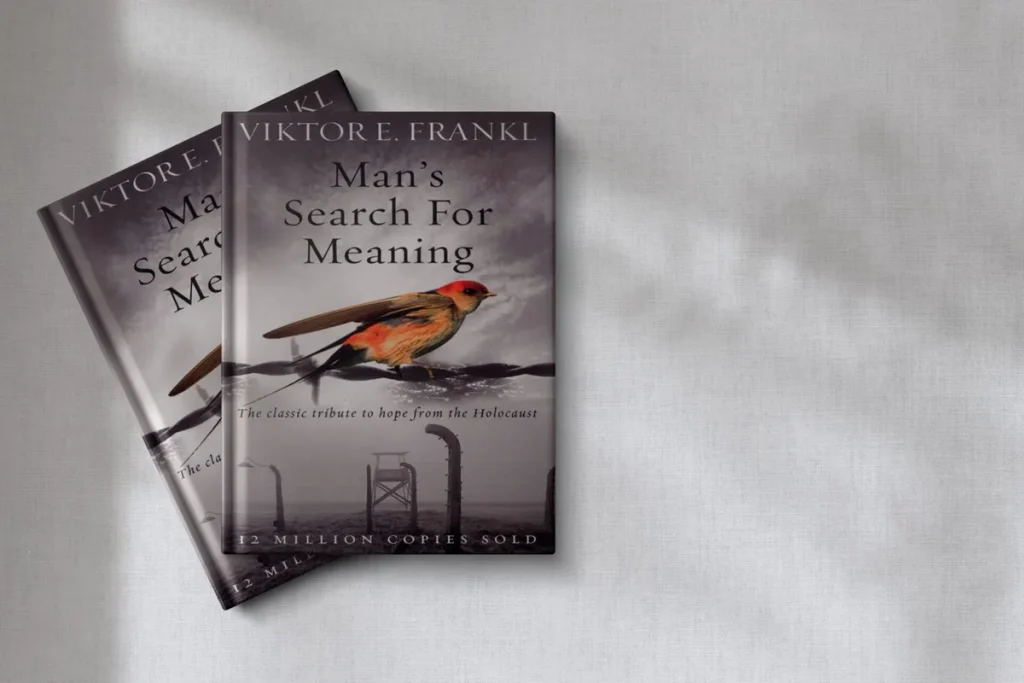
Frankl’s work is split into two parts: his harrowing experiences in the camps and an introduction to Logotherapy (his school of psychology). Here are the three profound insights that shifted my perspective.
1. The Last Human Freedom
This is the core of the book, and it resonates deeply with our recent discussions on the circle of control. Frankl observed that the guards could control his environment, his body, and his food intake, but they could not control his mind.
He writes, “Everything can be taken from a man but one thing, the last of the human freedoms, to choose one’s attitude in any given set of circumstances, to choose one’s own way.”
This hit me hard. We often blame our environment (the economy, the government, the boss) for our state of mind. Frankl proves that even in the literal worst place on Earth, our response remains our responsibility.
2. He Who Has a Why to Live…
Frankl frequently quotes Nietzsche: “He who has a why to live for can bear almost any how.” In the camps, Frankl noticed a grim pattern. The prisoners who survived weren’t necessarily the physically strongest; they were the ones who had a future goal to anchor them. For Frankl, it was the burning desire to rewrite a manuscript the Nazis had destroyed and the hope of seeing his wife again.
This taught me that meaning is a magnet. It pulls us through the present suffering toward a future vision. If you don’t have a why, a hidden treasure worth suffering for, the how of daily life will crush you.
3. Suffering Ceases to be Suffering When It Has Meaning
This is a tough pill to swallow, but a necessary one. Viktor Frankl argues that suffering is an inevitable part of life, like death. However, if we can find meaning in our adversity (viewing it as a test, a sacrifice for a loved one, or a growth path), it loses its power to destroy us.
It transformed my view on the hard things we face. Instead of asking, “Why is this happening to me?”, the better question is “What does life expect from me in this moment?”
Letdowns in Man’s Search for Meaning
While the book is a masterpiece, it is not without its friction points. The book is structured into two distinct halves. The first half (the memoir) is gripping, visceral, and deeply moving.
However, the second half, which explains the technicalities of Logotherapy, can feel incredibly dry and academic in comparison. After the intense emotional connection of the first part, the sudden shift to clinical terminology felt jarring. I found myself skimming sections of the second half, whereas I hung on every word of the first.
Additionally, for a modern reader, some of the psychological concepts might feel slightly dated, though the core philosophy remains timeless.
Is This Book for You?
I rate Man’s Search for Meaning a solid 9/10.
If you are going through a transition, facing a crisis, or simply feeling empty despite having a good life, this book is essential reading. It won’t make you happy in the cheap sense of the word, but it will give you the tools to find a deep, resilient purpose.
Have you read Frankl’s work? Do you agree that we should stop chasing happiness and start chasing meaning? Let me know in the comments.